Quick Answer
What Should a Man Wear to an Interview? Outfits by Dress Code The safest interview outfit is not always a suit. The goal is to look like you understand the company’s level of formality and made a deliberate effort. A useful rule is to dress about one step more polished than the role’s normal day-to-day clothing. For law, finance, senior management, and other conservative environments, a suit is still the safest choice. For many office, tech, sales, and agency roles, tailored trousers with a blazer, knit polo, or Oxford shirt can be more natural. For genuinely casual workplaces, dark jeans may work, but they should be clean, simple, and paired with a smarter top and shoes.
What to Wear to an Interview for Men: A Dress-Code Guide
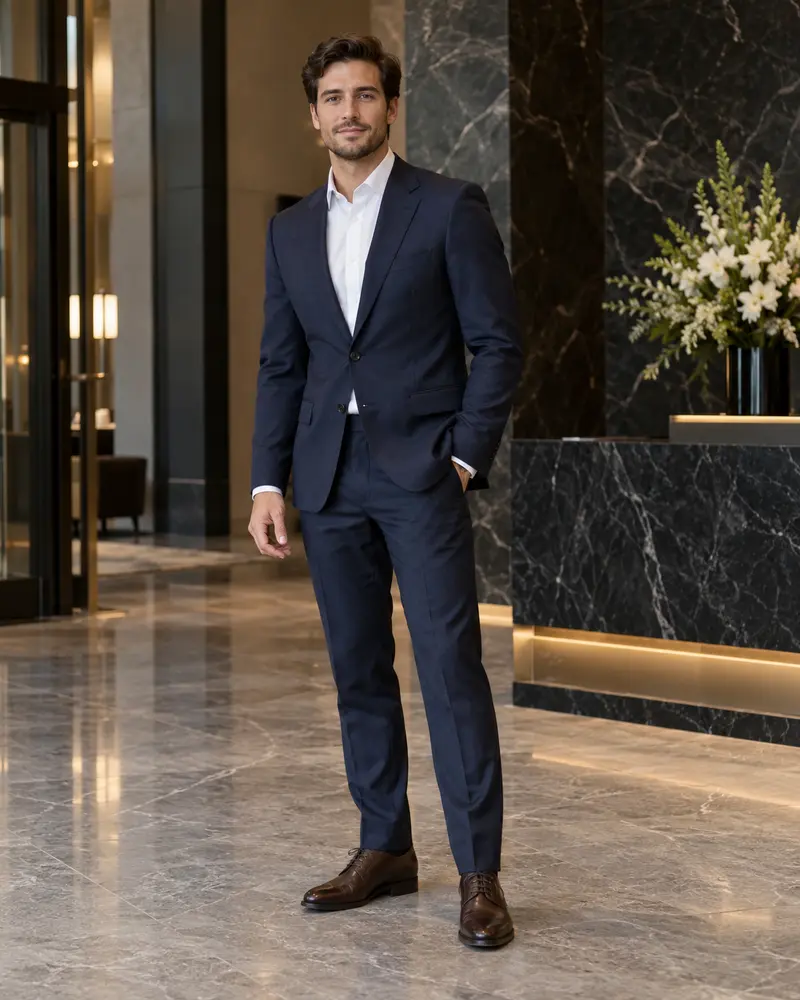
Navy Suit + White Shirt + Dark Brown Oxfords
This is one of the most dependable combinations for a formal interview. Navy is slightly softer than black, a white shirt keeps the look crisp, and dark brown or black leather shoes are easy to coordinate.
Best for: finance, law, consulting, management, formal corporate roles.
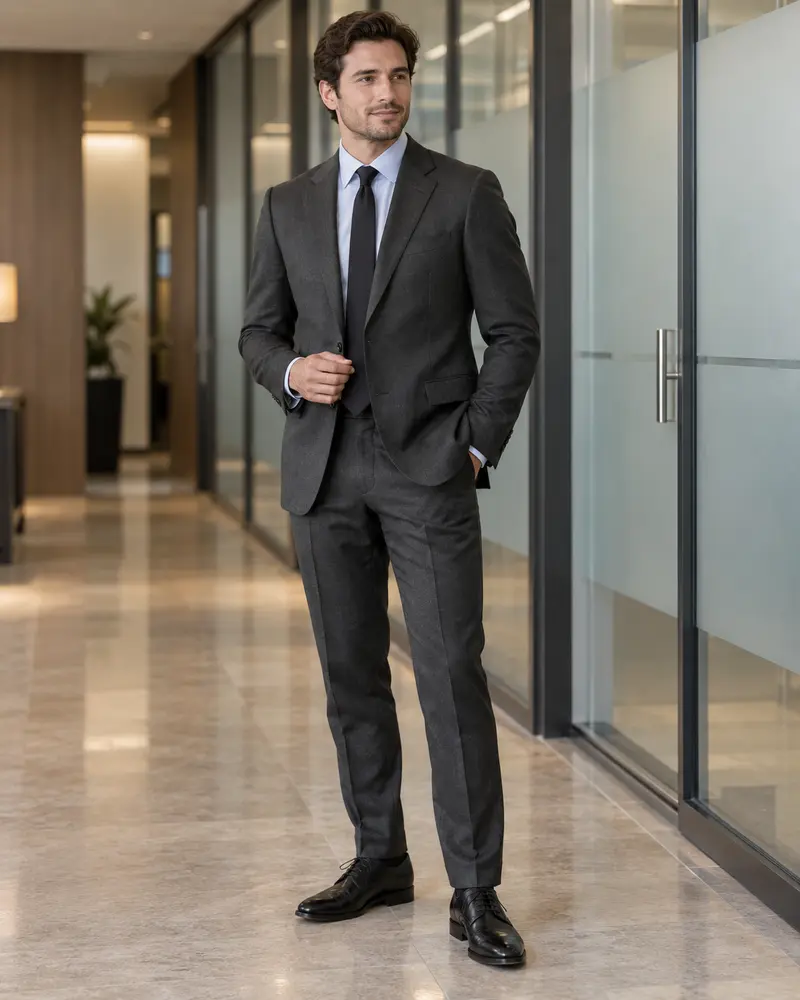
Charcoal Suit + Pale Blue Shirt + Black Derbies
Charcoal works particularly well when you want a serious look without wearing all black. Keep the shirt plain and the tie simple if one is expected. The fit of the jacket matters more than the brand name.
Best for: banking, legal, senior operations, other conservative interviews.
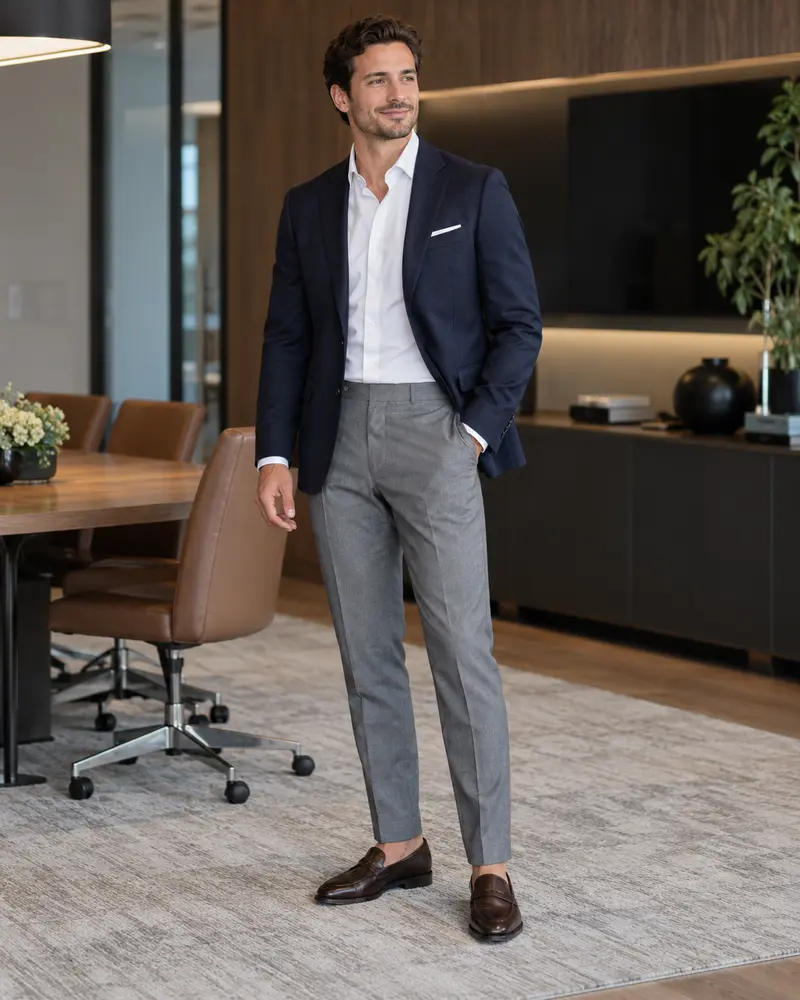
Navy Blazer + Grey Trousers + Loafers
A blazer and contrasting trousers are a good middle ground when a full suit feels too formal. Make sure the blazer is clearly a separate rather than half of a mismatched suit.
Best for: business-casual offices, account management, sales, marketing.
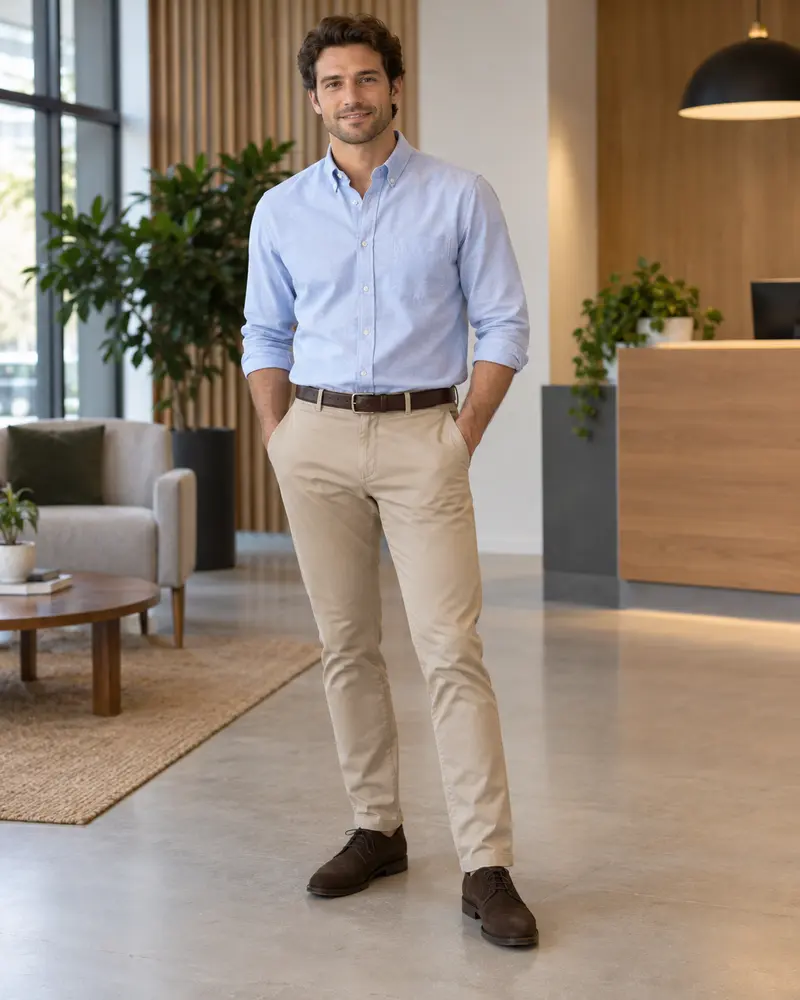
Oxford Shirt + Chinos + Suede Derbies
For a relaxed office, an Oxford shirt with well-fitted chinos can look prepared without feeling overdressed. Tuck the shirt in, wear a belt that works with the shoes, and avoid heavily distressed or overly slim trousers.
Best for: business-casual teams, customer success, smaller companies.
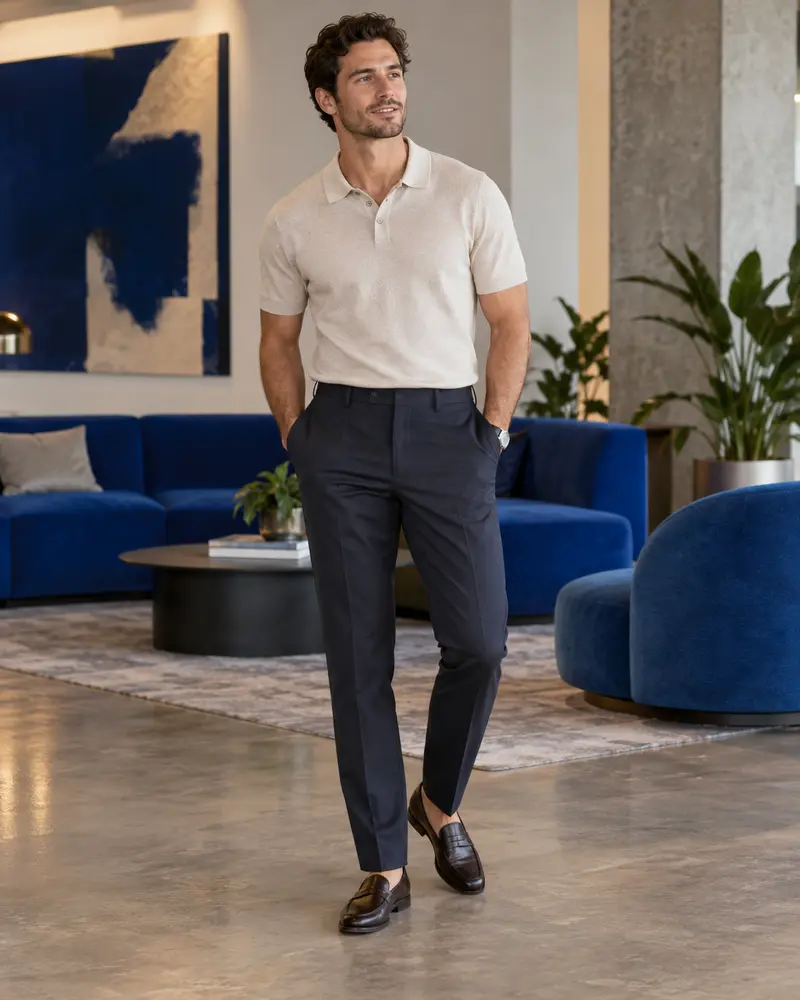
Fine-Knit Polo + Tailored Trousers + Loafers
A knit polo is more polished than a T-shirt but less stiff than a dress shirt. It works best in warm weather or modern workplaces where suits are uncommon.
Best for: design, tech, media, creative and startup roles.
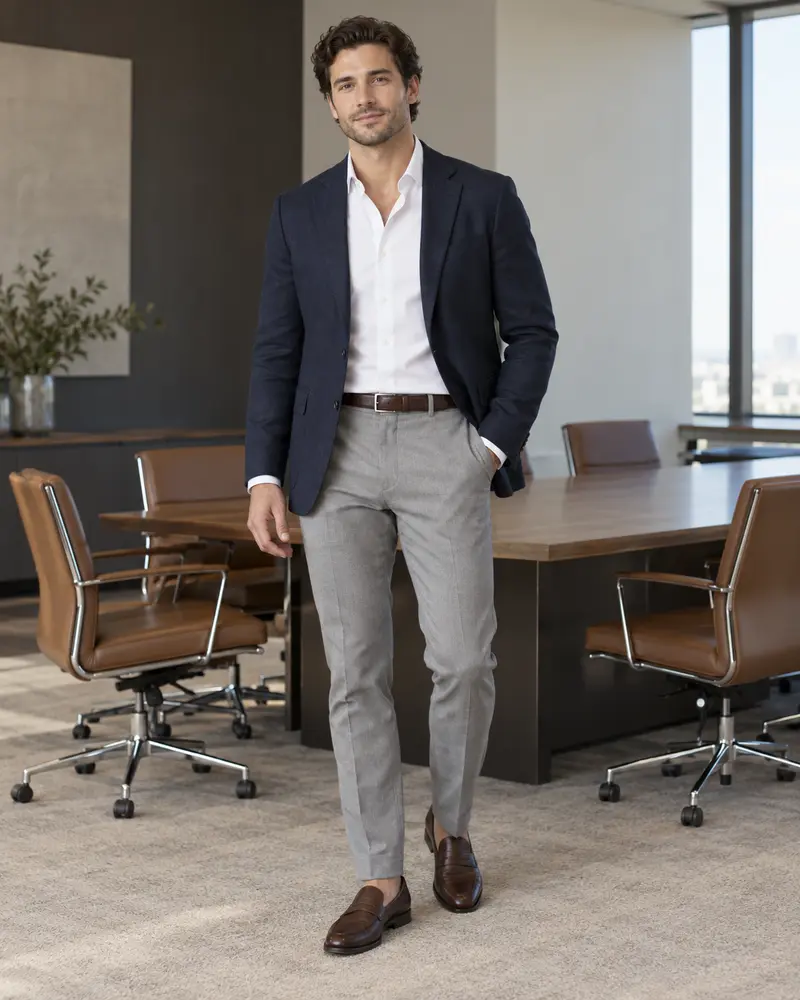
Unstructured Blazer + Open-Collar Shirt + Trousers
An unstructured blazer adds authority without the formality of a business suit. Keep the shirt collar crisp and limit accessories so the outfit still reads as professional.
Best for: tech, product, agency, and modern office interviews.
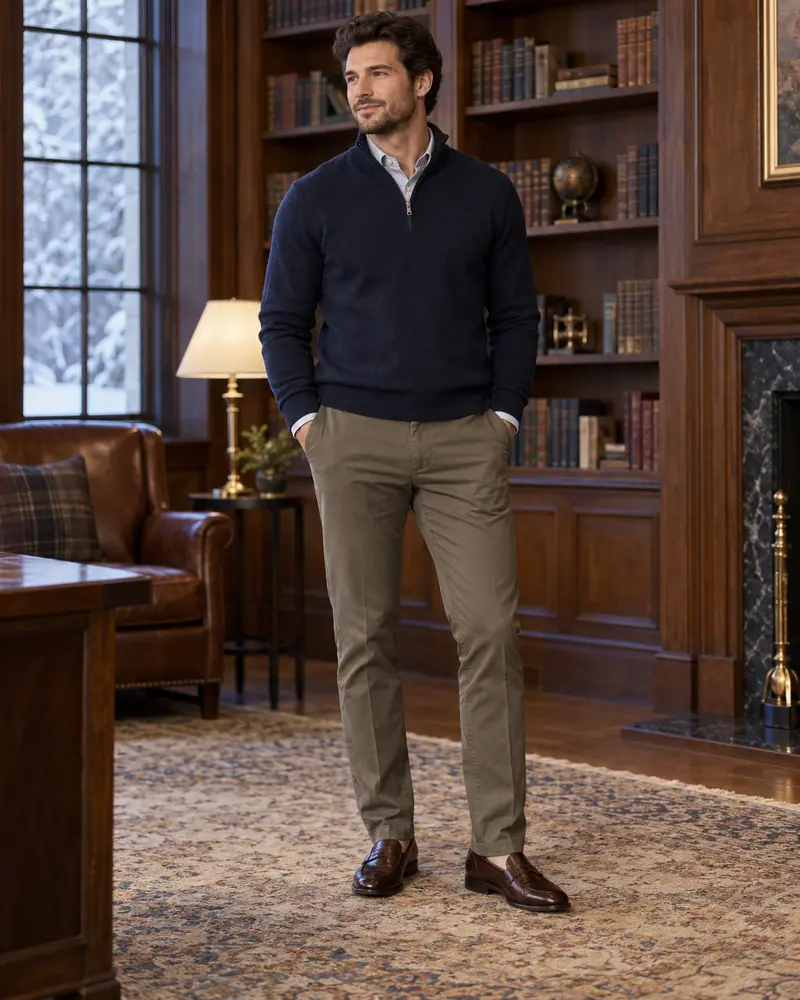
Quarter-Zip Knit + Collared Shirt + Chinos
This can work for conservative casual offices, especially in cooler weather. Choose a fine knit rather than a sporty fleece and keep the colors quiet—navy, grey, olive, or beige are safer than loud patterns.
Best for: fall and winter interviews in relaxed corporate workplaces.
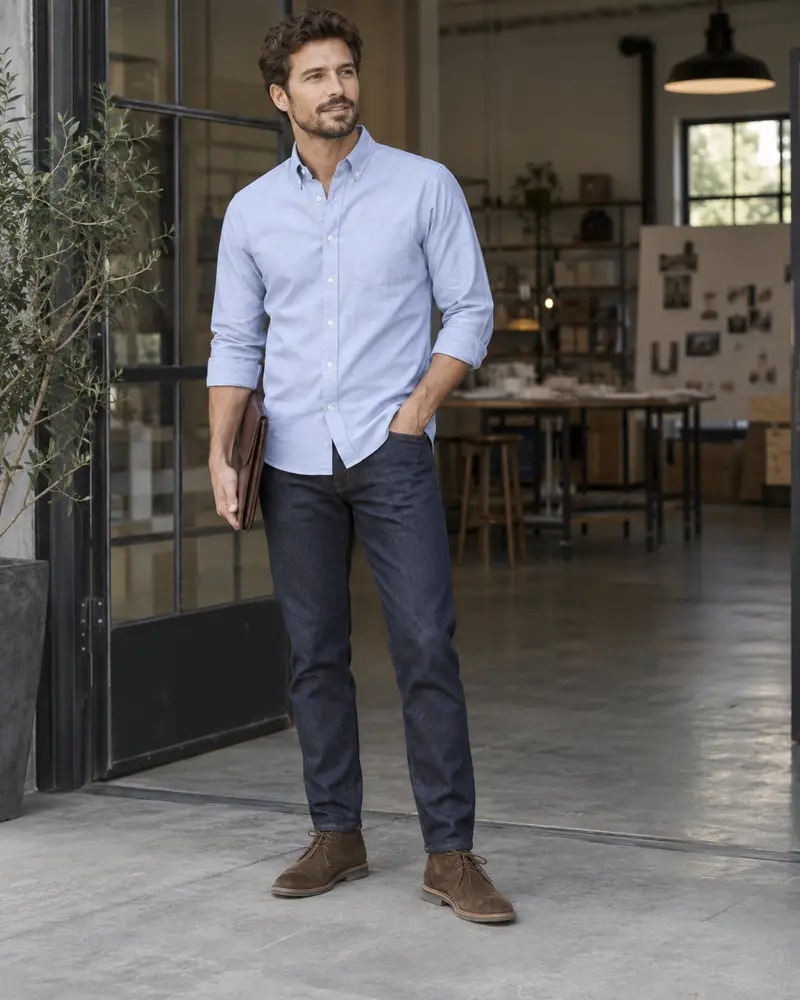
Dark Jeans + Oxford Shirt + Suede Chukkas
Use this only when you know the company is casual. The jeans should be dark, straight or tapered, and free from rips, fading, or obvious branding. If you are uncertain, switch the jeans for chinos.
Best for: clearly casual startups, studios, and hands-on creative roles.
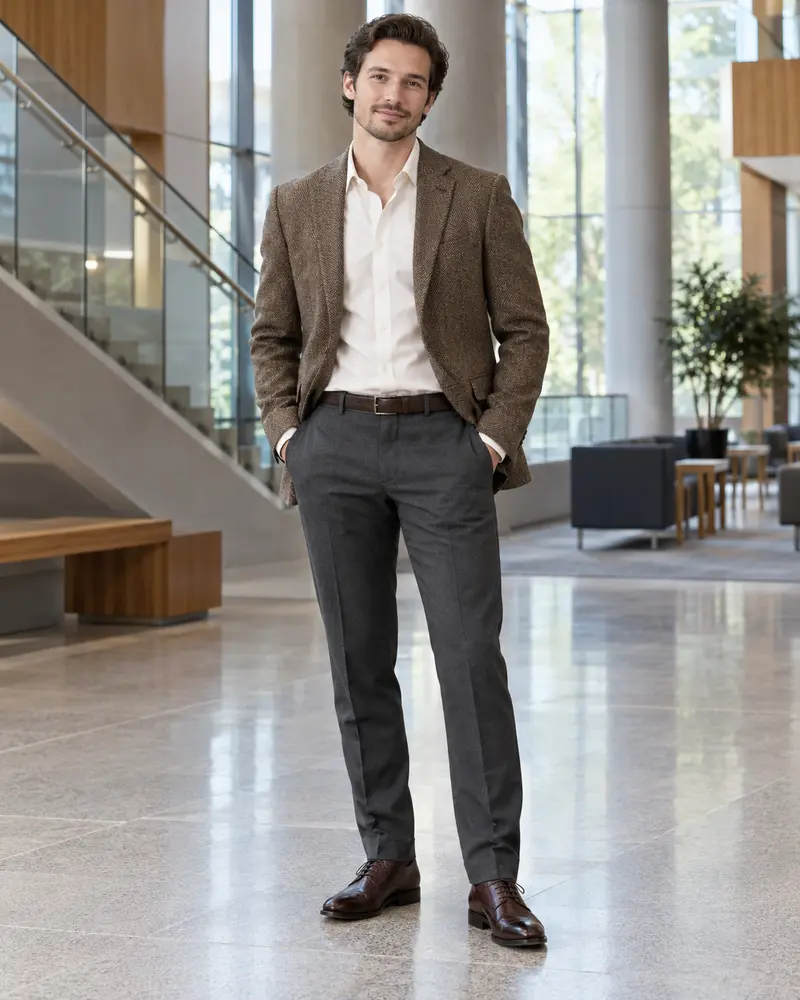
Brown Textured Blazer + Cream Shirt + Charcoal Trousers
A brown tweed or softly textured blazer feels confident without the severity of a business suit. Pair it with charcoal trousers and polished dark-brown shoes; keep the shirt plain so the texture remains subtle.
Best for: education, nonprofit leadership, business-casual management roles.
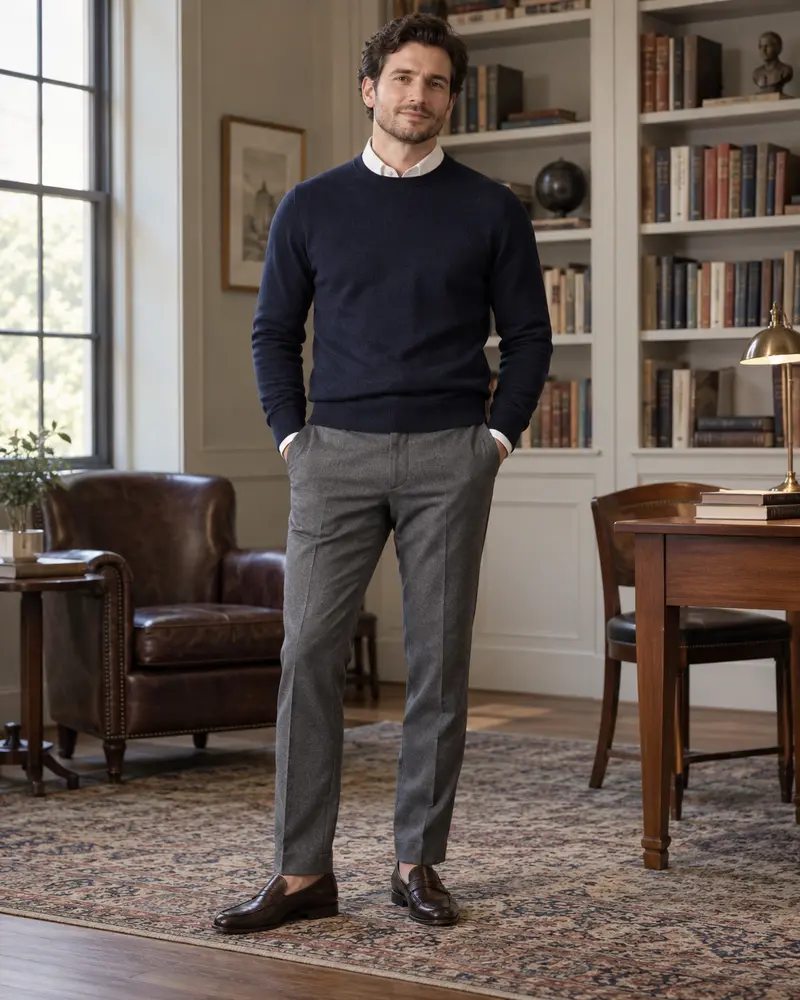
Navy Knit Crewneck + White Oxford + Grey Trousers
A fine-gauge navy sweater over a crisp Oxford creates a thoughtful, neat look when a jacket would be excessive. Let only a little collar show and choose leather loafers or Derbies rather than gym sneakers.
Best for: administrative, research, and business-casual office interviews.
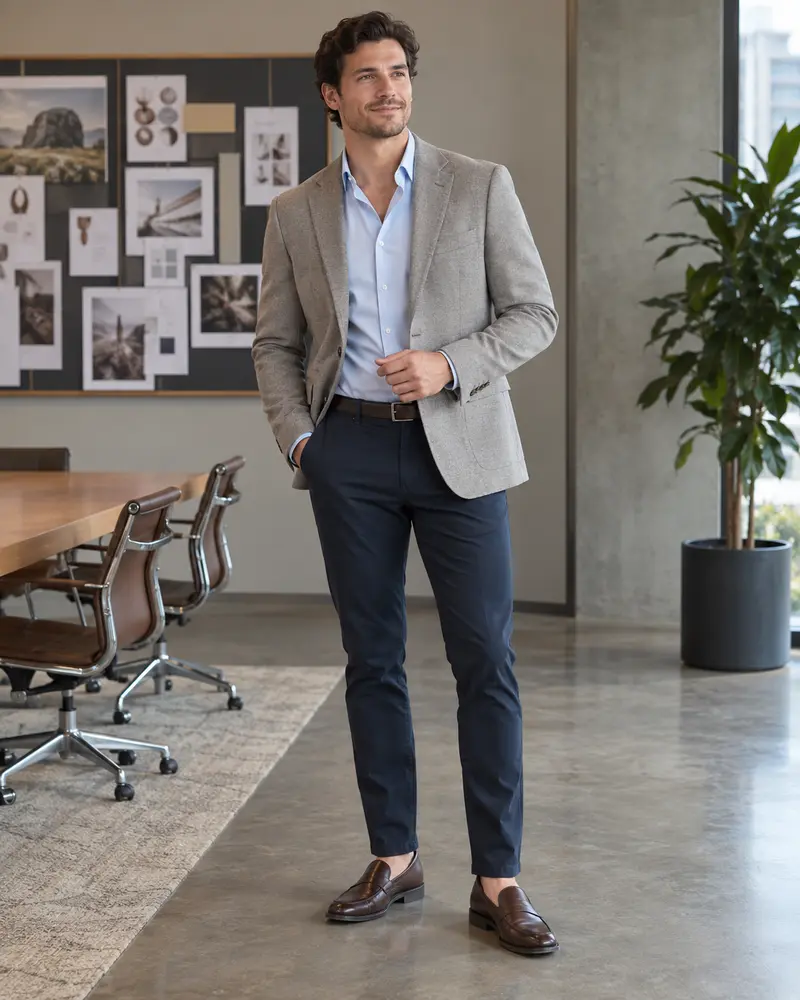
Neutral Blazer + Dark Chinos + Open-Collar Shirt
Stone or medium-grey tailoring looks approachable with navy chinos and a pale blue open-collar shirt. A fitted shoulder and pressed chinos prevent the relaxed combination from reading as everyday weekend wear.
Best for: marketing, account services, design-adjacent office roles.
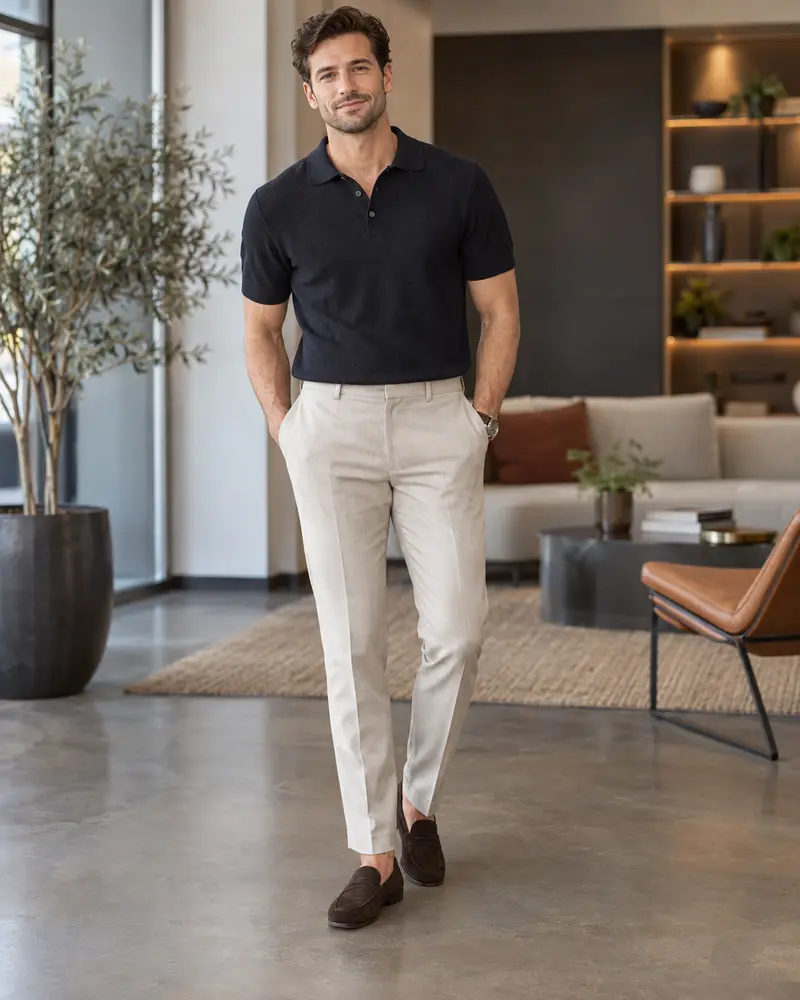
Dark Knit Polo + Stone Trousers + Suede Loafers
For warm-weather interviews at genuinely relaxed workplaces, a solid knit polo can work with structured trousers. Keep the fit clean and the footwear immaculate; move to an Oxford shirt if the employer’s dress code is unclear.
Best for: casual tech teams, retail headquarters, creative studios.
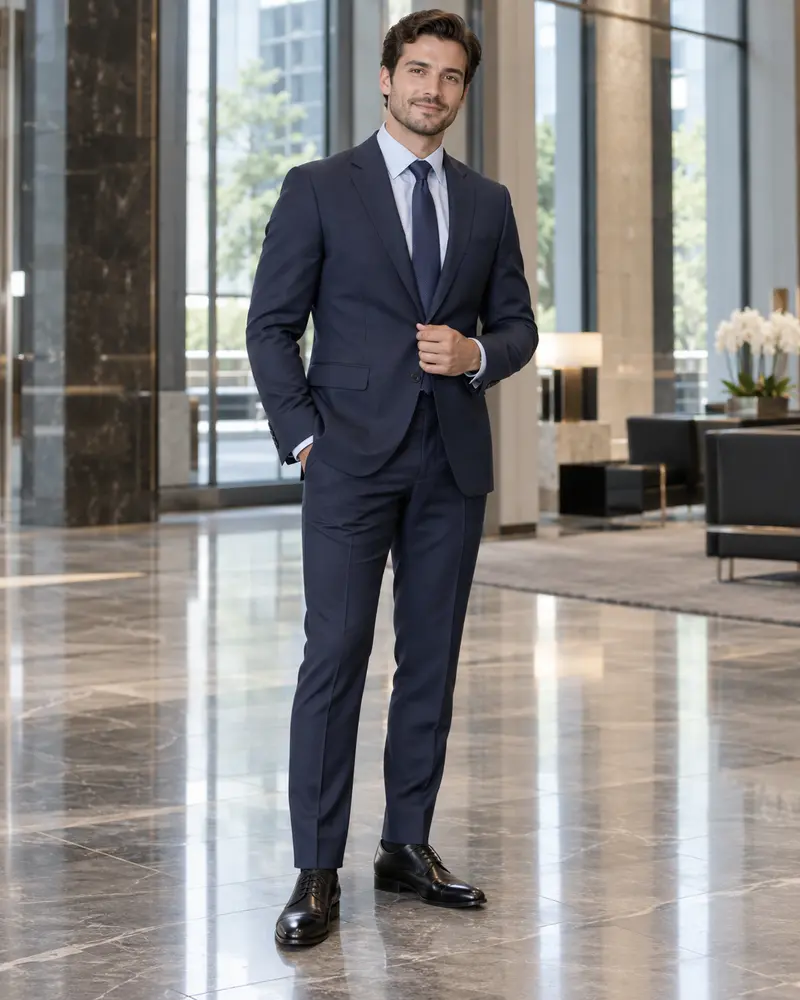
Navy Suit + Pale Blue Shirt + Black Oxfords
A navy suit can feel slightly more formal with black shoes and a pale blue shirt. Keep the tie restrained if the employer expects one, and make sure the jacket sits smoothly while seated.
Best for: graduate recruitment, corporate client-facing roles, finance interviews.
Final Takeaway
Choose your interview outfit by company culture first, then refine the fit and details. When you are unsure between two options, the slightly more polished one is usually safer—as long as you still look comfortable and like yourself.